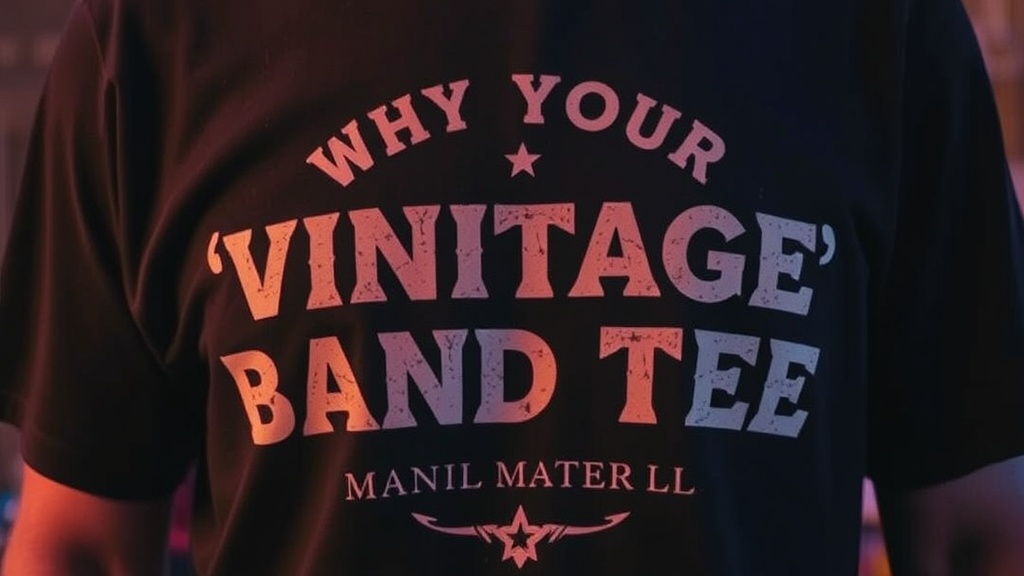
Why Your "Vintage" Band Tee Might Be Younger Than You Think

Most collectors assume that faded fabric and cracked graphics automatically mean a shirt is decades old. That assumption costs people hundreds of dollars every week. The vintage band shirt market has become flooded with pieces that look authentically worn but were printed within the last few years—some intentionally distressed by manufacturers, others simply washed repeatedly to fake age. Learning to identify genuinely vintage pieces separates casual buyers from collectors who protect their investments and build collections worth preserving.
What Makes a Band Shirt Actually Vintage?
The term "vintage" gets thrown around loosely in online listings. For serious collectors, vintage typically means twenty years or older—placing the cutoff around 2004 for items that qualify today. But age alone doesn't tell the whole story. A shirt manufactured in 1995 that sat in a warehouse until last year carries different value than one that saw actual concert venues and tour buses (and carries the stories to prove it).
Physical construction reveals more than sellers realize. Single-stitch hems at the sleeves and bottom hem indicate shirts manufactured before the mid-1990s, when most manufacturers switched to double-stitch construction for durability. The collar construction matters too—vintage shirts often feature narrower collar bands, typically around 3/4 inch wide, compared to the wider bands on modern garments. These details aren't visible in typical listing photos, which is exactly why sellers hoping to move reproductions avoid showing them.
Tag analysis provides concrete dating evidence. Screen Stars, Hanes Beefy-T, and Fruit of the Loom tags changed designs multiple times through the 1980s and 1990s. A Screen Stars tag with a blue oval and white lettering places the shirt between 1984 and 1993, while the later rectangular format indicates mid-1990s production. Resources like the Defunkd vintage tag database maintain extensive visual archives for comparison, and experienced collectors reference these obsessively before making purchases.
How Can You Spot Modern Reproductions?
Distressing techniques have become sophisticated enough to fool even experienced collectors. Acid washing, enzyme treatments, and mechanical abrasion can replicate years of genuine wear in factory settings. Some reproductions even replicate single-stitch construction specifically to deceive buyers seeking authentic vintage pieces—the manufacturers know exactly what collectors look for and engineer their fakes accordingly.
Print quality differences persist despite surface aging. Modern screen printing uses plastisol inks with different curing processes than those used in the 1980s and early 1990s. Authentic vintage prints often show slight texture variations where ink thickness varied across the design—modern reproductions tend toward uniform ink application even when artificially cracked. The paper-like feel of genuinely aged plastisol differs from factory-distressed alternatives too. Run your finger across a suspect print; vintage ink that has experienced two decades of washing develops a distinct brittleness and surface character that chemical treatments struggle to replicate perfectly.
Color palettes offer another tell. Original 1980s screen printing used specific ink formulations that aged in predictable ways—certain reds shift toward burgundy, particular blues develop a dusty cast. Modern reproductions attempting to replicate these effects often miss the subtle tonal shifts that genuine aging produces. Side-by-side comparison makes these differences obvious, though individual photos can obscure them.
Why Do Sellers Misrepresent Reproductions as Vintage?
The profit motive explains most misrepresentation. A reproduction that costs $8 to manufacture can sell for $60-$80 when labeled "vintage," while the same shirt listed honestly as "vintage-style" might fetch only $25. That difference—multiplied across hundreds or thousands of sales—creates powerful incentive to blur ethical lines. Small-time resellers often don't even know they're selling reproductions; they purchased from wholesalers who provided convincing backstories.
Platform algorithms reward high prices and "vintage" keywords. Search results prioritize listings using popular terminology, which means honest sellers describing items as "reproductions" or "modern reprints" get buried beneath hundreds of listings screaming "RARE VINTAGE." The ecosystem itself pressures sellers toward misleading language just to achieve visibility.
Major retailers contribute to confusion through licensed reproduction programs. Brands like Bravado (Universal Music Group's merchandise arm) produce officially licensed replicas of classic tour shirts using original artwork. These garments feature modern construction and contemporary tags but sometimes enter secondary markets stripped of context that would identify them as reproductions. The ethical boundary isn't always clear-cut—some collectors appreciate quality reproductions for personal wear, preserving authentic vintage pieces for display or investment. Problems arise only when reproductions sell at vintage prices to buyers who don't understand what they're purchasing.
What Should You Check Before Buying Online?
Documentation separates verifiable vintage from questionable listings. Original purchase receipts, concert ticket stubs from the same tour, or provenance tracing back to original owners provide confidence that fabric wear occurred naturally over years rather than in manufacturing facilities. These documents aren't always available—most people didn't save receipts for concert shirts—but their presence dramatically increases confidence in a piece's authenticity.
Photographic evidence helps when paperwork doesn't exist. Request clear images of the tag—front and back—along with close-ups of stitching at stress points and the inside collar construction. Sellers offering genuine vintage pieces typically understand these requests; those selling reproductions often become evasive or defensive. Be particularly wary of sellers who claim their camera "can't capture detail" or who offer only heavily filtered photos that obscure fabric texture.
Price points themselves offer clues. A "vintage" 1987 Metallica shirt listed for $25 should trigger immediate skepticism. Authentic tour shirts from major bands in the 1980s and early 1990s command substantially higher prices due to scarcity and demand. The WorthPoint price database tracks actual sale prices for vintage band merchandise, helping buyers recognize unrealistic deals that probably indicate reproductions. When something seems too good to be true, the market is telling you something important.
Where Can You Learn More About Authenticating Vintage Tees?
Online communities provide invaluable education for collectors at every level. Reddit's r/vintagebandshirts and similar forums feature members who freely share authentication knowledge, often responding to "legit check" requests within hours. These communities maintain collective knowledge bases documenting known reproductions, suspicious sellers, and emerging scam techniques. Lurking for a few weeks before posting teaches newcomers more than any single guide could.
Reference collections matter more than most beginners realize. Experienced collectors typically maintain physical examples of verified authentic pieces across different eras, allowing direct comparison when evaluating new acquisitions. Touching genuine vintage fabric—feeling the weight of cotton from specific decades, observing how different inks crack naturally—develops intuition that photos alone cannot provide. Some collectors even purchase "study pieces"—inexpensive verified vintage shirts specifically for comparison purposes.
Physical inspection at vintage shops and collector shows builds expertise rapidly. Handling dozens of shirts in an afternoon, comparing tags and construction across different eras, trains your eye faster than months of online research. Shop owners who specialize in vintage band merchandise usually enjoy discussing authentication details with serious customers. These conversations often reveal nuances—specific regional manufacturing variations, limited tour print runs—that never appear in written guides.
The vintage band shirt market rewards educated buyers who look past surface appearance. Single-stitch construction, tag characteristics, and reasonable price expectations protect collectors from the most common misrepresentation schemes. Every purchase becomes an opportunity to refine your evaluation skills—skills that matter more than any single shirt in your collection. The hunt for genuine vintage pieces isn't just about acquiring clothing; it's about developing expertise that serves you across decades of collecting.