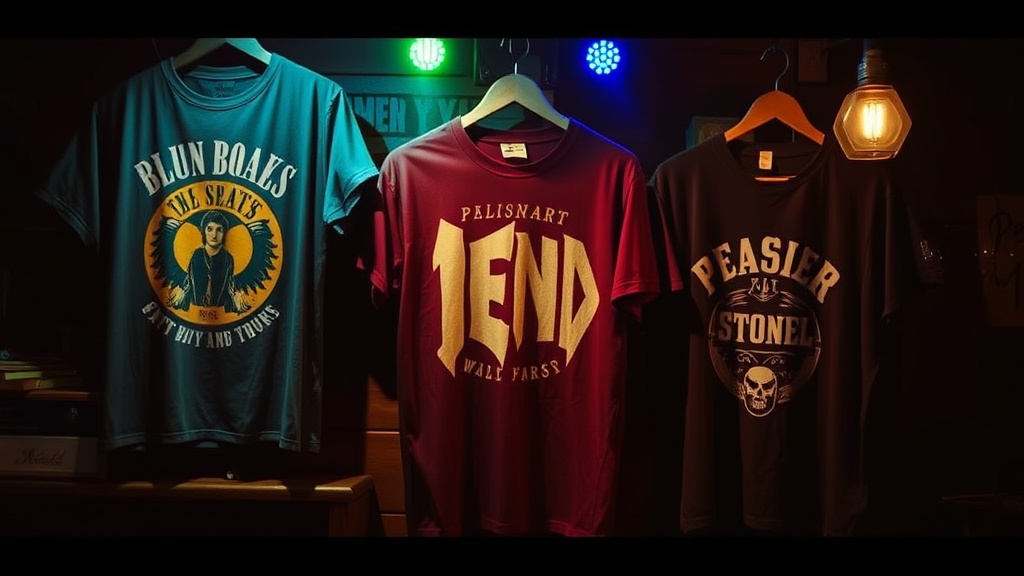
Why Your Vintage Band Tee Collection Needs Specialized Lighting

Imagine walking into a dimly lit basement, pulling a rare 1992 Nirvana tour shirt from a dark corner, and realizing the vibrant purple ink has turned a dull, muddy grey. This isn't just a bad look; it's a sign that your display environment is working against your collection. For collectors, the way we light our items dictates how much we actually enjoy them. While a dark room keeps things moody, it also hides the very details—the cracked textures, the halftone dots, and the subtle fabric-dye interactions—that make a piece valuable. This post covers the impact of light on textile-based collectibles and how to choose setups that highlight your gear without destroying it.
Does UV light actually ruin vintage band shirts?
The short answer is yes. Sunlight is the enemy of any textile collector. UV radiation breaks down chemical bonds in both the fabric fibers and the ink pigments. When you see a shirt that looks 'washed out' or has a yellowish tint in the white areas, you're looking at photodegradation in real time. This isn't just about color; it's about the structural integrity of the cotton itself. A shirt exposed to too much light becomes brittle and loses its shape.
If you keep your collection in a room with large windows, you're essentially running a slow-motion experiment in destruction. It's better to treat your display like a museum piece. According to the
What is the best way to display band shirts without damage?
There's a constant debate in the community: do you hang them, fold them, or frame them? Each method has its own set of risks. If you're using hangers, the weight of the shirt can cause the shoulders to stretch out—a phenomenon known as 'hanger bumps.' This is particularly common with heavy, oversized vintage tees. If you must hang them, use padded hangers rather than thin wire or plastic ones.
For those with high-value items, framing is the gold standard for protection, but it introduces a new set of rules. You shouldn't let the shirt touch the glass directly. If the fabric touches the glass, moisture can become trapped, leading to mold or even sticking the ink to the pane. Use a spacer or a mounting board to create a gap. This also allows air to circulate around the garment.
- The Hanger Method: Best for frequent rotation, but requires padded support to prevent stretching.
- The Flat Fold Method: Safest for the fabric, but makes it harder to view the full graphic.
- The Framed Method: Best for visual impact and protection from dust, provided you use UV-resistant glazing.
When choosing a display style, consider the weight of the graphic. A heavy, thick screen print adds weight to the front of the shirt. If you hang a shirt with a massive, heavy print, gravity will pull the neckline down over time. I've seen many collectors lose a perfectly good shirt to a heavy graphic that eventually pulled the collar into an unwearable shape because it was left on a hanger for three years.
How do I prevent color fading in my display?
Color management is a game of prevention. If you want your collection to look as vivid as the day you bought it, you have to control the environment. This means more than just the light source; it involves the temperature and humidity of the room. A hot, humid room can cause the dyes in the shirt to migrate or bleed, especially in older, single-wash garments.
If you're using an LED setup, try to use 'warm' light rather than 'cool' or 'daylight' settings. While cool white light can look crisp, it can sometimes make the colors look a bit artificial. A warmer temperature tends to compliment the vintage aesthetic of older tees. However, don't go overboard with brightness. A bright, glaring light is much more likely to cause heat-related issues than a soft, diffused glow.
One trick I use is to rotate my collection. Don't keep the same three shirts on the wall for five years. By rotating your display, you ensure that no single piece is constantly under the spotlight. This keeps the collection feeling fresh and prevents any one item from taking the brunt of the light exposure. It's a simple way to manage the 'wear and tear' of being on display.
Check your lighting-to-textile relationship every few months. Look at the shirt under a magnifying glass if you have to. If you see the edges of the print starting to look fuzzy or if the color looks less saturated than the others in the set, it's time to change your lighting or move the piece to a darker storage area. Keeping a collection is about more than just owning things; it's about maintaining the history they represent.
| Light Type | UV Risk | Heat Risk | Recommendation |
|---|---|---|---|
| Direct Sunlight | Very High | High | Avoid completely |
| Fluorescent | Moderate | Low | Use with caution |
| LED | Low | Very Low | Highly Recommended |