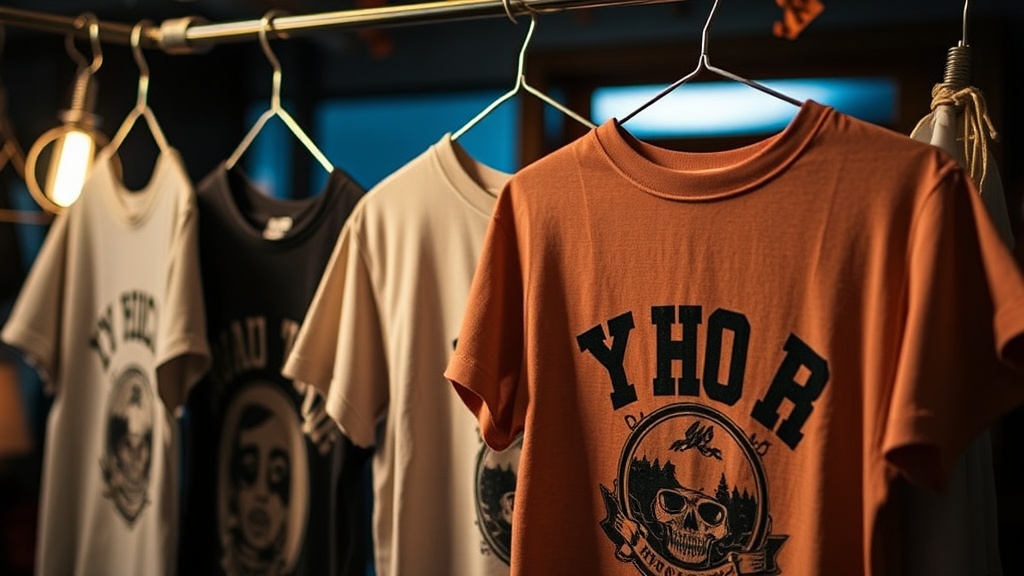
Why You Should Never Hang Vintage Band Tees on Wire Hangers

Quick Tip
Always store vintage band t-shirts folded in acid-free containers or on padded hangers to prevent stretching, shoulder bumps, and fabric deterioration.
Vintage band tees aren't just clothing—they're wearable artifacts from tours that happened decades ago. The wrong storage method (like wire hangers) can destroy these pieces in months. This post breaks down why wire hangers wreck vintage shirts and what actually works for preservation.
Why Are Wire Hangers Bad for Vintage T-Shirts?
Wire hangers destroy vintage band tees through a combination of pressure points and chemical reactions. The thin metal wire creates sharp creases at the shoulders that become permanent over time. Unlike modern plastic or padded alternatives, wire hangers have no give—they dig into fabric fibers and stretch out the neckline.
The real damage happens slowly. That iconic 1987 Guns N' Roses Appetite for Destruction tour tee? Hanging on wire for a year leaves it misshapen, with stretched shoulders and a sagging collar. Vintage cotton—especially the thin, soft ringspun varieties from the 70s and 80s—lacks the structural integrity of modern heavyweight blanks. It can't bounce back.
Here's the thing: wire hangers also rust. Humidity in closets causes oxidation, and that reddish-brown residue transfers directly onto white or light-colored shirts. Once rust sets into vintage fabric, it's nearly impossible to remove without damaging the screen-printed graphics.
What's the Best Way to Store Vintage Band Tees?
Folding and storing flat in acid-free containers beats hanging for long-term preservation. For shirts that must hang, wide-shoulder wooden hangers or padded hangers distribute weight evenly and eliminate pressure points.
The catch? Not all "wooden" hangers help. Avoid the cheap versions with thin shoulders—they're barely better than wire. Look for hangers with at least 2-inch shoulder width, like the Woodlore Contoured Hangers from The Container Store. These follow the natural slope of shoulders.
Padded hangers work well for delicate or distressed vintage pieces. The Hanger Project's padded satin options prevent snags on cracked, aged prints. Worth noting: padded hangers take up more closet space. For collectors with hundreds of shirts, this becomes a real consideration.
| Hanger Type | Best For | Drawbacks | Price Range |
|---|---|---|---|
| Wire Hangers | Dry cleaning returns only | Shoulder bumps, rust risk, stretches collars | Free (don't use) |
| Plastic Tubular | Modern shirts, temporary storage | Can sag with heavy vintage cotton | $0.50–$2 each |
| Wood (Wide Shoulder) | Heavy vintage blanks, display pieces | Takes up closet space, higher cost | $8–$15 each |
| Padded/Satin | Delicate, distressed, high-value items | Bulky, expensive at scale | $12–$25 each |
| Acid-Free Boxes (Folded) | Long-term storage, large collections | Requires folding, less accessible | $15–$30 per box |
How Should You Fold Vintage Band Tees for Storage?
Fold vintage shirts along natural seams to prevent creasing across graphics. Lay the shirt face down, fold sleeves back along the shoulder seams, then fold the bottom third up and the top third down. Store folded tees in acid-free archival boxes—like those from Gaylord Archival—with tissue paper between layers.
Never store vintage band tees in plastic bins long-term. Trapped moisture breeds mildew, and vinyl graphics can stick to plastic surfaces. If bins are your only option, drill ventilation holes and add silica gel packets. Cotton needs to breathe—especially decades-old fabric that's already survived mosh pits, countless washes, and tour bus living.
That said, rotation matters. Even perfectly stored vintage shirts benefit from occasional refolding. Switch the fold lines every six months to prevent permanent creases. For truly rare pieces—original 1977 Sex Pistols "God Save the Queen" shirts, first-run Nirvana "Smiley" tees from 1991—consider professional archival framing with UV-protective glass.
The goal isn't just keeping shirts wearable. It's preserving the history printed on them—every cracked ink layer, every softened collar, every fade pattern that marks where sunlight hit a tour schedule across forty summers. Handle them like the artifacts they are.