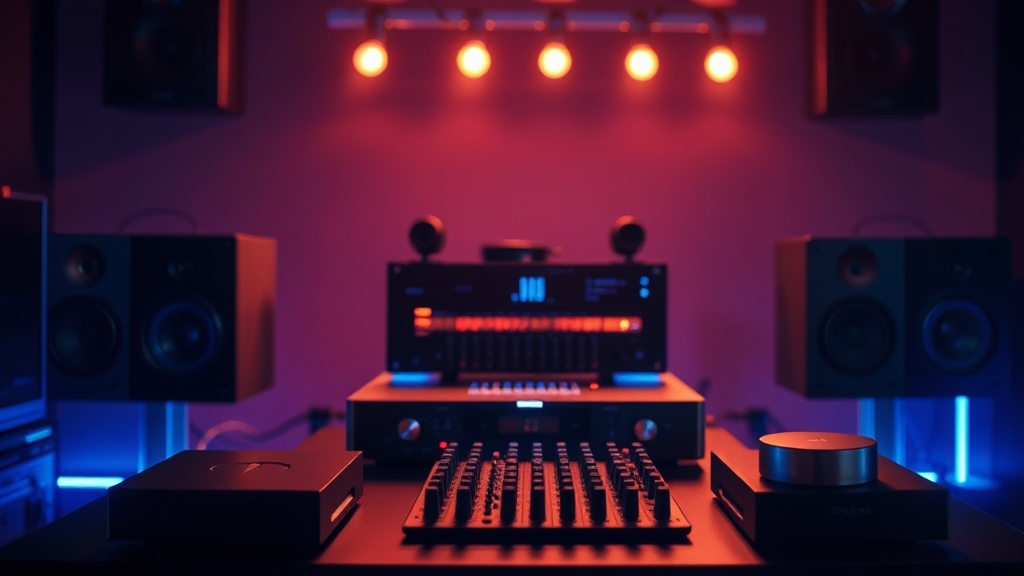
Why High-Fidelity Audio Gear Dictates Your Listening Experience

What defines high-fidelity audio for the average listener?
This post examines the technical and practical factors that separate mediocre sound from true high-fidelity audio. You'll learn how hardware choices, signal paths, and even room acoustics change how you hear your favorite music. It isn't just about expensive gear; it's about understanding the chain of command from the recording to your ears.
Most people assume that any pair of decent headphones will do the job. That's a mistake. High-fidelity—or hi-fi—is about minimizing the distance between the artist's intention and your perception. When you listen to a well-produced record, you're hearing a specific frequency response. If your equipment is cheap, it might dampen the low end or muddy the high-frequency transients. This creates a flattened, lifeless experience that misses the nuance of the performance.
The signal chain is the most important concept to grasp. It starts at the source (the digital file or vinyl record), moves through a DAC (Digital-to-Analog Converter), into an amplifier, and finally out to your speakers or headphones. If one link in that chain is weak, the whole experience suffers. You can have a thousand-dollar amplifier, but if you're playing a low-bitrate streaming file, you aren't going to hear much of anything. The source determines the potential; the gear determines the delivery.
The Role of the DAC and Amplification
Digital audio is just a string of numbers. To hear music, those numbers must become electrical pulses. This is where the DAC comes in. A quality DAC ensures that the conversion process is clean and free from jitter—the timing errors that can make audio sound harsh or brittle. While your phone or laptop has a built-in DAC, dedicated external units often provide a much more stable and accurate translation of the data.
Once the signal is analog, it needs strength. This is the job of the amplifier. Amplification isn't just about making things louder; it's about providing enough current to drive your speakers or headphones efficiently. Underpowered gear often leads to a loss of dynamic range. You might notice that the drums feel "soft" or the vocals lack presence. This isn't a fault of the song; it's a lack of power from your hardware. If you want to see how various playback systems work, the AudioReview community is a great place to see real-world testing and discussions.
How Room Acoustics Affect Sound Quality
You can own the most expensive setup on the planet, but if your room is a literal echo chamber, you're in trouble. Sound waves interact with surfaces. Hardwood floors, bare walls, and large windows create reflections that cause "comb filtering." This is when certain frequencies cancel each other out, making your music sound thin or unbalanced. This is why some people spend more on acoustic treatment than they do on the actual speakers.
- Hard Surfaces: Concrete, glass, and tile bounce sound back instantly, creating a "bright" and harsh sound.
- Soft Surfaces: Rugs, curtains, and even bookshelves help absorb or diffuse sound waves, smoothing out the listening environment.
- Speaker Placement: Even a few inches of movement can change the soundstage. If your speakers are too close to a wall, the bass might become boomy and uncontrolled.
Understanding the relationship between your environment and your gear is what separates a casual listener from a true enthusiast. It’s a constant balancing act of physics and electronics.
Can better hardware actually change how I hear music?
The short answer is yes, but with a caveat. You aren't hearing "new" parts of the song; you're simply hearing the parts that were already there but were previously obscured by poor-quality equipment. A high-quality setup provides better "transparency." This means the hardware stays out of the way. When you're listening to a complex jazz piece, a transparent system allows you to hear the subtle vibration of a cymbal or the breath of a saxophone player. It's a much more intimate way to experience a recording.
A great way to understand the difference in audio quality is to look at the technical standards set by organizations like the Hiệp hội Hi-Res Audio. They provide benchmarks for what constitutes high-resolution audio. If you're using standard compressed MP3s, you're essentially looking at a low-resolution photo of a masterpiece. You can see the shapes, but the texture and the fine details are gone. Moving to lossless formats like FLAC or ALAC, combined with better hardware, allows that texture to return.
The Comparison of Different Audio Formats
It's helpful to look at how different formats handle data. A table below compares the common types of audio you'll encounter in your collecting and listening journey:
| Format Type | Common Use | Sound Characteristics |
|---|---|---|
| MP3 (Lossy) | Streaming/Mobile | Compressed, lacks high-end detail, small file size. |
| FLAC (Lossless) | Audiophile Collections | Full-fidelity, preserves all data, larger file size. |
| Vinyl (Analog) | Physical Collections | Warm, organic, contains subtle surface noise. |
| CD (PCM) | Standard Digital | Consistent, clean, highly predictable. |
As you build your collection, whether it's digital files or physical media, keep in mind that your hardware must be capable of interpreting that data. A high-end vinyl setup is a completely different beast than a digital streaming setup. Vinyl requires a high-quality stylus, a preamp, and a phono stage to translate the physical grooves into sound. It's a mechanical process that requires physical precision.
Does the headphone vs. speaker debate matter?
This is a perennial debate in the audio community. Speakers offer a sense of "soundstage"—the ability to perceive where instruments are placed in a three-dimensional space. When you're sitting in a room with a well-tuned stereo, the music feels like it's happening around you. This is a physical phenomenon that headphones struggle to replicate, even with advanced DSP (Digital Signal Processing) or spatial audio algorithms.
However, headphones offer a level of isolation and detail that speakers often can't match at the same price point. A high-end pair of open-back headphones can provide a sense of depth and clarity that makes you feel like you're inside the recording booth. The choice really depends on your listening habits. If you're a late-night listener who wants to catch every tiny detail without waking the neighbors, headphones are your best bet. If you want to feel the air move and the music fill the room, you need a speaker setup.
Regardless of which path you take, the goal remains the same: reducing the friction between the music and your senses. Whether it's through better room treatment, a more capable DAC, or simply choosing the right format, the effort you put into your gear will directly impact your enjoyment of the music you collect.