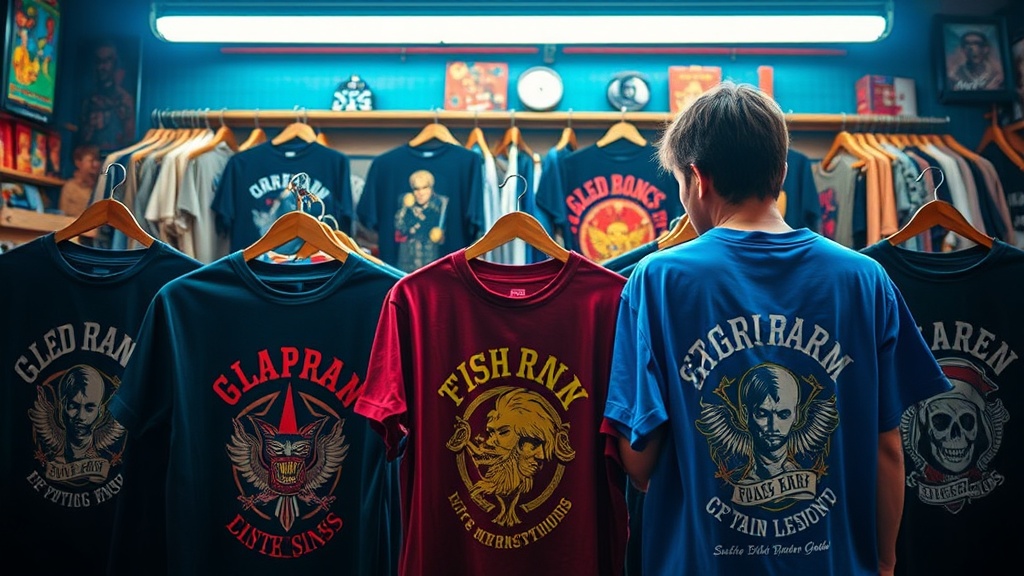
Vintage Band T-Shirts: A Collector's Guide to Finding Authentic Gems

What Makes a Vintage Band T-Shirt Worth Collecting?
Vintage band t-shirts represent more than just clothing—they're wearable pieces of music history that capture specific moments in time. Whether you're hunting for a 1977 Sex Pistols tour shirt or a rare Nirvana 1991 "Smiley Face" tee, understanding what separates authentic gems from mass-produced reproductions can save hundreds of dollars and countless headaches. This guide covers everything needed to build a meaningful collection: spotting authentic vintage, knowing which eras and bands command premium prices, finding reputable sellers, and avoiding the flood of fakes flooding the market. You'll learn practical evaluation techniques, where serious collectors shop, and how to care for these cotton time capsules so they last decades more.
How Can You Tell If a Band T-Shirt Is Actually Vintage?
Authentic vintage band t-shirts have distinct characteristics that separate them from modern reproductions—the fabric, stitching, tags, and printing methods all tell a story.
Start with the tag. Vintage shirts from the 1970s and 1980s often feature tags from Screen Stars, Hanes Beefy-T, or Fruit of the Loom with specific era-appropriate typography. The catch? Many reproductions copy these tags, so you'll need to dig deeper. Check the stitching—single-needle construction on the hem and sleeves typically indicates pre-1990s manufacturing. Modern shirts almost always use double-needle stitching for durability.
The fabric itself reveals age. Authentic vintage cotton feels different—thinner, softer, sometimes slightly irregular in weave. It's been washed dozens (or hundreds) of times. New shirts trying to look vintage use enzyme washes or sandblasting to fake that worn feeling, but the wear patterns look uniform. Real vintage shows random fading, thin spots at stress points, and collar wear that follows actual human anatomy.
Printing methods evolved significantly. Early screen printing (1970s–1980s) sits on top of the fabric with a slightly raised, rubbery feel. The ink cracks in a specific spiderweb pattern over decades—not the artificial cracking some repros add. Heat-transfer prints became common in the late 1980s and 1990s; these feel smoother and integrate more with the fabric but show different aging characteristics.
Worth noting: the "single stitch" vs. "double stitch" debate. Single-needle hem construction (one line of stitching at the bottom hem) generally indicates pre-1994 shirts. After 1994, most manufacturers switched to double-needle construction for cost efficiency. That said, some modern reproductions deliberately use single-needle stitching to trick buyers, so don't rely on this alone.
Which Vintage Band T-Shirts Are Worth the Most Money?
The most valuable vintage band t-shirts typically come from iconic tours, limited print runs, or bands with cult followings—and condition matters enormously, with pristine examples commanding 10x what worn equivalents fetch.
Grunge era shirts dominate the high-end market right now. A genuine Nirvana "In Utero" tour shirt from 1993–1994 in excellent condition can sell for $800–$1,500. The 1991 "Smiley Face" shirt—featuring Kurt Cobain's crude drawing with "Flower Sniffin Kitty Pettin Baby Kissin Rock N Roll" text—regularly hits $1,000+ at auction. Pearl Jam's early Ten-era shirts, especially those from the 1991–1992 tours, fetch similar prices.
Here's the thing: metal shirts from the 1980s have exploded in value. Iron Maiden's "Piece of Mind" tour shirts, Metallica's "Ride the Lightning" era gear, and anything from Slayer's early days command serious money. A 1986 Metallica "Master of Puppets" tour shirt—especially one with dates on the back—can exceed $2,000 if unworn and properly stored. The Misfits' "Fiend Club" shirts from the original Danzig era (1977–1983) are holy grails, sometimes reaching $3,000–$5,000.
Punk and hardcore shirts from the 1970s–1980s represent perhaps the rarest category. Original Sex Pistols tour merchandise from 1977? Good luck finding one under $5,000. Minor Threat, Black Flag, and Dead Kennedys shirts from their original print runs (not the endless reissues) start at $300 and climb rapidly based on condition and specific design.
Hip-hop vintage band shirts occupy a fascinating niche. Original Run-DMC, Beastie Boys, and Public Enemy shirts from the 1980s—especially those from specific tours—have appreciated dramatically. A 1986 Beastie Boys "Licensed to Ill" tour shirt in deadstock condition recently sold for $1,200.
| Band/Era | Typical Shirt Type | Price Range (Excellent Condition) | What to Look For |
|---|---|---|---|
| Nirvana (1991–1994) | Smiley Face, In Utero tour | $400–$1,500 | Single stitch, original Screen Stars tag, no reprint markings |
| Metallica (1983–1986) | Ride the Lightning, Master of Puppets tour | $600–$2,500 | Date lists on back, specific tour cities, Metal Up Your Ass designs |
| Iron Maiden (1982–1985) | Piece of Mind, Powerslave tour | $300–$1,200 | Eddie artwork, specific tour dates, European vs. US variations |
| Sex Pistols (1977) | Never Mind the Bollocks tour | $2,000–$8,000 | UK origin, extremely rare—provenance documentation critical |
| Black Flag (1981–1986) | bars logo, Slip It In era | $250–$800 | SST Records association, Raymond Pettibon artwork |
| Led Zeppelin (1970s) | US tour shirts, Swan Song logo | $400–$1,800 | Specific tour years, ZOSO symbols, iron-on transfers common |
Where Do Serious Collectors Find Authentic Vintage Band Tees?
Serious collectors source vintage band t-shirts through specialized dealers, estate sales, dedicated vintage clothing shops, and carefully vetted online marketplaces—knowing that general thrift stores have been picked clean for years.
Estate sales remain the gold standard for discoveries. When someone who attended concerts in the 1970s, 1980s, or 1990s passes away, their closets sometimes contain unworn treasures. The key is targeting sales in specific demographics—suburban areas where original fans aged into homeownership decades ago. Tucson, for example, has yielded surprising finds from retirees who followed the 1970s–1980s tour circuit through the Southwest.
Specialized dealers operate both online and through physical locations. Stores like What Goes Around Comes Around in New York and Rag & Bone curate authenticated vintage with premium pricing—but you get what you pay for. Online, platforms like Grailed have robust vintage communities with seller reputation systems, though you'll still need authentication knowledge.
Music festivals and collector conventions offer another avenue. Events like the Austin Psych Fest often host vintage vendors alongside the music. Specialized conventions—rock memorabilia shows, punk flea markets—attract dealers who understand the market and carry inventory worth examining in person.
The catch? eBay and Etsy are flooded with fakes. If a "vintage" Metallica shirt costs $25 and the seller has fifty in stock, you're looking at reproductions. Authentic vintage has scarcity—dealers might have one or two of a specific shirt, not shelves full. Always request detailed photos of tags, stitching, and any wear patterns before purchasing.
What Are the Biggest Red Flags for Fake Vintage Band Shirts?
The biggest warning signs include suspiciously low prices, unlimited quantities, modern sizing standards, and sellers who can't provide specific provenance or detailed photos of construction details.
Modern "vintage style" shirts from retailers like Hot Topic, Urban Outfitters, or even band official stores deliberately mimic aged aesthetics—but they're not vintage. These are fine for wearing if you like the look, but they'll never appreciate in value. The tags typically say "vintage wash" or "distressed style" somewhere. Real vintage doesn't need to announce itself.
Reproductions from overseas markets (particularly Southeast Asia) have become sophisticated. They copy tags, use single-needle stitching, and even apply artificial wear. Here's the thing: the ink is usually wrong. Modern water-based inks feel different and age differently than the plastisol inks used through the 1990s. Hold the shirt up to light—vintage screen printing often shows slight misregistration, color variations between prints, and imperfect coverage that machines today eliminate.
Size discrepancies reveal fakes. A "Large" vintage shirt from 1985 fits like a modern Medium—or even Small. The sizing standards changed significantly. If someone claims a shirt is from 1987 but it fits true-to-modern-size Large, be suspicious. Similarly, vintage shirts often have shorter sleeves and boxier cuts than contemporary fitted styles.
Scent matters. Authentic vintage has a specific smell—old cotton, decades of storage, sometimes slight mustiness that washing never fully eliminates. Reproductions smell like new fabric, chemical treatments, or nothing at all. Experienced collectors develop an instinct for this.
Specific Fakes to Watch For
- Nirvana smiley shirts with ©NIRVANA on the tag—Kurt drew that image; it was never officially copyrighted on the original prints
- Metallica "Metal Up Your Ass" shirts without date lists—authentic tour shirts had specific city dates
- Any "vintage" shirt with a barcode and modern RN number—these weren't used until the late 1990s
- Band shirts from artists who didn't tour with merchandise programs—research whether your specific band actually sold shirts at concerts
- Perfect condition on supposedly 40-year-old shirts—deadstock exists but is rare; most authentic vintage shows some age
How Should You Store and Care for Vintage Band T-Shirts?
Proper storage means acid-free materials, climate control, avoiding direct light, and understanding when to fold versus hang—treatment that can preserve value for decades.
For display pieces or investment-grade shirts, acid-free tissue paper and archival boxes beat hanging. Wooden hangers (especially cedar) work for regular rotation, but never use wire hangers—they distort shoulders over time. The ideal storage environment stays between 65–70°F with 45–55% humidity. Basements and attics destroy vintage clothing through temperature swings and moisture.
That said, wear your shirts if you want—just understand the trade-off. Every wash fades printing slightly. Machine washing beats hand washing for construction (agitation actually strengthens vintage fibers), but always cold water, always inside-out, always air dry. The dryer is where vintage shirts die—heat destroys elastic, weakens already-aged fabric, and cracks prints.
Worth noting: stains don't always kill value, but improper cleaning attempts do. Never bleach vintage. Never use stain sticks with harsh chemicals. For significant pieces, professional textile conservation costs money but preserves authenticity. A visible stain on an otherwise pristine 1977 Sex Pistols shirt might reduce value by 30%; a botched DIY cleaning job can render it worthless.
Documentation adds value. Keep receipts, provenance notes, and photographs of acquisition. When you sell (if you sell), buyers pay premiums for shirts with clear histories. That $500 Black Flag shirt with a photo of the original owner wearing it at the 1984 show? That's now a $700 shirt with story intact.
Start small. Build knowledge before building inventory. The vintage band t-shirt market rewards patience, research, and relationships with trustworthy dealers. A single authenticated piece from a reputable source beats ten questionable "deals" from sketchy sellers. Happy hunting—may your next estate sale yield the grail you've been seeking.