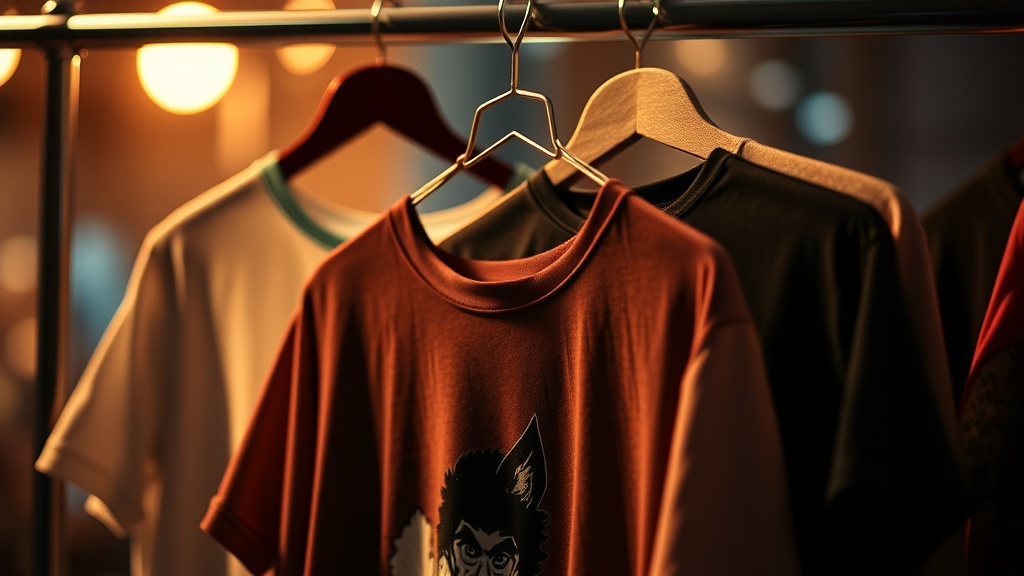
Stop Using Wire Hangers for Your Heavy Graphic Tees

Quick Tip
Switch to wide, padded, or wooden hangers to prevent permanent shoulder distortion in heavy cotton shirts.
Most collectors assume that as long as a shirt isn't being washed improperly, it's safe. That's a mistake. Using thin wire hangers on heavy-duty graphic tees—especially those with thick, high-density screen prints—is a fast track to ruining your collection's silhouette. This post explains why wire hangers are the enemy of heavy cotton and what you should use instead.
Why Are Wire Hangers Bad for Graphic Tees?
Wire hangers create permanent "shoulder nipples" and can stretch the neckline of heavy-weight cotton shirts. Because wire is thin and lacks surface area, the weight of a heavy concert tee pulls downward, concentrating all the stress on two tiny points. If you've ever seen those awkward bumps on the shoulders of a vintage shirt, you've seen the damage caused by improper hanging.
Heavy graphic tees often feature thick ink or even puff print designs. The weight of these prints adds even more tension to the fabric. If you're hanging a heavy 6.5oz cotton shirt, the gravity doesn't just pull on the fabric—it pulls on the print itself. This can lead to cracking or even slight distortion of the graphic over time. It's a subtle way to lose value in your collection.
To avoid this, you need to understand the different types of support:
| Hanger Type | Best For | Risk Level |
|---|---|---|
| Wire | Nothing (Avoid) | High |
| Plastic | Standard T-shirts | Medium |
| Wooden/Wide-Shoulder | Heavyweight/Vintage Tees | Low |
| Folded (Drawer) | Extreme Heavyweight/Puff Prints | Zero |
What Is the Best Way to Store Heavy Band Shirts?
The best way to store heavy graphic tees is to fold them flat in a drawer or a dedicated storage bin. Folding prevents any tension on the shoulder seams and keeps the screen print from stretching. If you must hang them, use wide-shoulder wooden hangers or thick plastic ones that distribute weight across a larger area.
For those with high-value vintage items, I've found that folding is almost always superior. It's much easier to maintain screen printing integrity when the garment isn't fighting gravity. A heavy 90s tour shirt shouldn't be hanging; it should be tucked away safely. If you're worried about the fabric itself, check out my previous post on preserving vintage screen prints and fabric integrity.
How Do I Prevent Hanger Bumps?
To prevent hanger bumps, switch to hangers with rounded, padded, or wide edges immediately. If you're out of options, even a thick-gauge plastic hanger is better than a thin wire one. You can also look into the textile standards regarding fabric weight to understand how much tension your specific shirt can actually handle before it deforms.
One trick I use? If you see a slight bump forming, don't panic. You can often steam the area to help the fibers relax, but that's a temporary fix for a permanent problem. It's better to just stop using the wire hangers now. Your collection—and your wallet—will thank you.