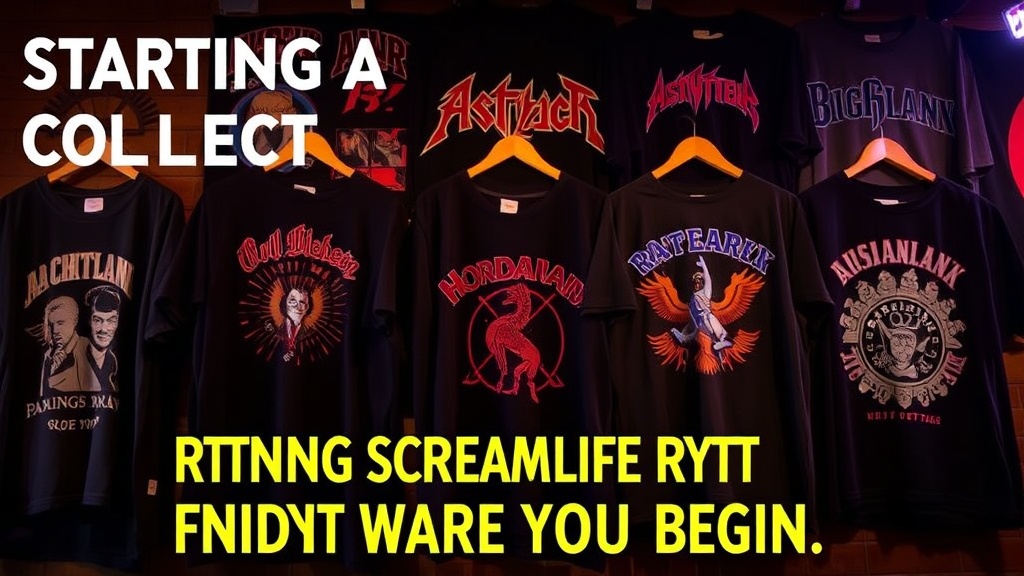
Starting a Band Shirt Collection When You Don't Know Where to Begin

What This Guide Covers — And Why Starting Smart Matters
Building a band shirt collection from nothing can feel overwhelming. You're staring at empty closet space or bare walls, scrolling through Instagram collections that took decades to amass, wondering how anyone finds the good stuff without getting ripped off. This guide walks you through the practical first steps: setting realistic goals, finding legitimate sources, building authentication skills, and avoiding the common pitfalls that drain wallets and kill enthusiasm. Whether you want ten meaningful shirts or plan to fill a room, the foundation you build now determines everything that follows.
Where Should You Actually Look for Quality Band Shirts?
The hunt is half the fun — but only if you know where to look. Most beginners default to eBay, and that's fine, but you're competing with thousands of other buyers and algorithms that bury good listings under promoted junk. You need a multi-channel approach.
Start with dedicated vintage clothing marketplaces like Grailed and Etsy — not for every purchase, but for building your eye. These platforms attract sellers who photograph carefully and describe accurately because their reputation depends on it. Study their listings even when you can't afford to buy. Notice how they date shirts by tags, point out flaws, and photograph print cracking. This education is free.
Local thrift stores and estate sales remain underrated goldmines — especially in smaller markets where competition is lighter. Tucson (where I'm based) has produced remarkable finds simply because fewer collectors are hitting the same spots weekly. Develop relationships with estate sale companies and vintage shop owners. Tell them what you're looking for. Many will call you first when Metallica '88 tour shirts surface.
Don't ignore the collector community itself. Facebook groups, Reddit communities like r/vintagebandtshirts, and Discord servers facilitate trades and sales between people who actually care about this stuff. The prices are often fairer than auction sites because sellers aren't paying platform fees, and the authentication help you'll receive is worth its weight in cotton. Just remember — PayPal Goods and Services exists for a reason. Use it for every transaction with strangers.
How Do You Tell Real Vintage from Modern Reproductions?
Authentication separates collectors from people with a closet full of overpriced fakes. The skill isn't innate — it's learned through handling hundreds of shirts, making mistakes, and studying what separates authentic vintage from clever reproductions.
Start with the tag. Vintage shirts from the '70s through '90s used specific manufacturers: Screen Stars, Hanes Beefy-T, Fruit of the Loom with the old logo, Anvil from certain eras. Learn what these tags look like. Modern reproductions often use cheap blanks that feel wrong — too heavy, too soft, or printed on modern fits that didn't exist in 1985. A single Google search for "Screen Stars tag history" yields photographic references that will save you hundreds of dollars.
Examine the print itself. Original screen printing from the '80s and '90s sits on top of the fabric — you can feel it. The ink cracks in specific patterns as it ages. Modern digital printing (DTG) soaks into the fabric and feels flat, smooth, almost plastic-y. Fakes often use DTG because it's cheap for one-offs. Run your fingers across the graphic. If it feels like it's part of the shirt rather than sitting on top, be suspicious.
Study the wear patterns too. Authentic vintage shows age in logical places — collar softening from neck sweat, armpit discoloration (sorry, it's true), hem stress from repeated washing. Fake distressing looks uniform and staged — holes punched in random spots, artificial fading that stops at seams. Real age doesn't respect seams.
Finally, know your history. That Nirvana "Smiley Face" shirt with a 1991 tour date? Kurt didn't use that logo until later. The Metallica "Justice for All" shirt dated 1986? The album came out in 1988. These anachronisms are obvious once you know the band's timeline, and they expose reproductions immediately. Wikipedia is your friend here — no shame in verifying dates.
What's the Smart Way to Budget for a New Collection?
Collecting can drain your bank account fast if you let emotion drive decisions. Set boundaries before you start buying.
Establish monthly spending limits — not maximums, but actual budgets that fit your financial reality. The vintage market fluctuates, but quality shirts hold value reasonably well. You're not throwing money away, but you are tying it up in fabric. Don't spend rent money on a rare Megadeth tee no matter how tempting.
Track every purchase. A simple spreadsheet with columns for band, year, condition, purchase price, and source keeps you honest about spending patterns. After six months, you'll spot your weaknesses. (Mine was '90s punk shirts I'd never actually wear.) This data helps you course-correct before bad habits calcify.
Build a "want list" with tiered priorities. Tier 1: shirts you'd pay market rate for immediately. Tier 2: shirts you'd buy at the right price. Tier 3: shirts you'd take if they're basically free. This prevents impulse purchases on shirts that don't actually matter to you. When that eBay notification hits at 2 AM, consult the list. If it's not there, close the app.
Factor in restoration costs too. That $40 shirt with a torn collar might need $25 in professional repair. Vintage clothing repair specialists exist in most major cities — they're worth finding. But add those costs to your purchase price when evaluating deals. A "cheap" shirt needing extensive work often costs more than a pricier pristine example.
How Should You Store Shirts While Your Collection Grows?
Storage mistakes destroy collections. Sunlight, moisture, improper folding, and cheap hangers turn valuable shirts into damaged goods faster than you'd think.
Folding beats hanging for long-term storage — but do it right. Acid-free tissue paper between folds prevents crease marks from setting permanently. Store folded shirts in archival-quality plastic bins (not vacuum bags, which trap moisture and encourage mold). Keep them in climate-controlled spaces — attics and garages experience temperature swings that accelerate fabric degradation.
If you must hang shirts (and you will, for rotation and display), use wide, padded hangers or at least thick plastic. Wire hangers create shoulder bumps that never fully relax. Never hang vintage shirts wet — the weight stretches the fabric permanently.
For displayed shirts, UV-protective glass or acrylic in frames is non-negotiable. Direct sunlight fades graphics within months. If you're building a gallery wall, position it away from windows or invest in blackout curtains. That vibrant Iron Maiden "Somewhere in Time" back print will turn ghostly pale before you notice it's happening.
What Should Your First Five Purchases Actually Be?
New collectors often chase grails immediately — the rarest, most expensive pieces they see on Instagram. This is backwards. Your first five shirts should serve specific educational purposes.
Shirt one: something cheap from the '90s with a Screen Stars tag. Handle it. Study it. This is your baseline for understanding authentic vintage feel and construction. Don't spend more than $30.
Shirt two: a band you actually love, from any era, in wearable condition. This keeps you connected to why you started collecting. If you hate hair metal, don't buy Mötley Crüe shirts because someone said they're "hot right now."
Shirt three: something with obvious wear — cracking, faint pit stains, a small hole. Learn to evaluate whether flaws matter to you personally. Some collectors want pristine museum pieces. Others prefer shirts that look like they survived actual concerts. Know your preference early.
Shirt four: a modern reproduction of a classic design, purchased intentionally. Compare it to your vintage pieces. Feel the difference in fabric weight, print texture, and construction. This comparison shopping builds authentication skills faster than any guide.
Shirt five: something that scares you slightly — a higher price point or an era you're less familiar with. This stretches your comfort zone and tests whether your research skills are solid. If you can't confidently authenticate a $200 shirt, you shouldn't buy it yet. Go back to studying.
Starting a band shirt collection isn't about accumulating fabric — it's about building expertise, relationships, and a personal archive of music history that happens to be wearable. Take your time. The good shirts have lasted forty years; they'll wait for you to be ready.