Seven Ways to Turn Your Band Shirt Collection Into Actual Room Decor

You have more band shirts than drawer space. They're stuffed in bins, piled on chairs, or crammed into closets where nobody sees them. This post covers seven display methods that get your collection out of storage and into your living space—without making your home look like a merchandise booth. You'll learn which techniques work for small apartments versus spacious rooms, what materials actually protect fabric long-term, and how to arrange shirts so they look intentional rather than cluttered.
What Is the Best Way to Display Band Shirts Without Damaging Them?
The biggest fear collectors have is ruining a rare find through improper display. Sunlight fades ink. Cheap frames trap moisture. Tacks and pins leave permanent holes in vintage cotton. The solution starts with understanding your environment before you hang a single shirt.
Floating frames remain the gold standard for serious collectors. These shallow shadow boxes keep fabric suspended between two sheets of acid-free board—no glass pressing against the print, no cardboard backing that yellows over time. You can find museum-grade floating frames through archival suppliers like Archival Methods or custom frame shops that understand textile preservation. Expect to pay $40–$80 per frame depending on size, but your 1988 Metallica tour tee deserves better than a $12 drugstore special.
For a more accessible option, consider garment display cases designed specifically for T-shirts. These acrylic boxes open from the front, letting you swap shirts seasonally without dismantling the whole setup. They're popular in retail environments for a reason—they keep dust out while allowing air circulation that prevents musty buildup. Pro tip: add a silica gel packet inside each case if you live somewhere humid (Arizona collectors like Iris can skip this step).
Can You Display Band Shirts Without Framing Them?
Absolutely—and sometimes the unframed approach looks more sophisticated. The key is treating the shirt like fabric art rather than laundry.
Canvas stretcher bars offer a clean, gallery-style presentation. You stretch the shirt over a wooden frame (the kind painters use) and staple the excess fabric to the back. The result looks like intentional wall art—flat, taut, with crisp edges. This method works especially well for shirts with large front prints that you want to showcase like album covers. The downside? You can't wear the shirt afterward, so reserve this technique for duplicates or shirts with damage that makes them unwearable anyway.
Decorative ladders have become popular in interior design circles, and they adapt perfectly to band shirt display. Lean a wooden ladder against the wall and drape shirts over the rungs. The casual draping feels less museum-like and more lived-in—which fits the rebellious spirit of most band merchandise. Rotate shirts monthly to prevent creases from setting permanently into the fabric. This approach shines when you want to switch up your display frequently or when you're staging a space for photos.
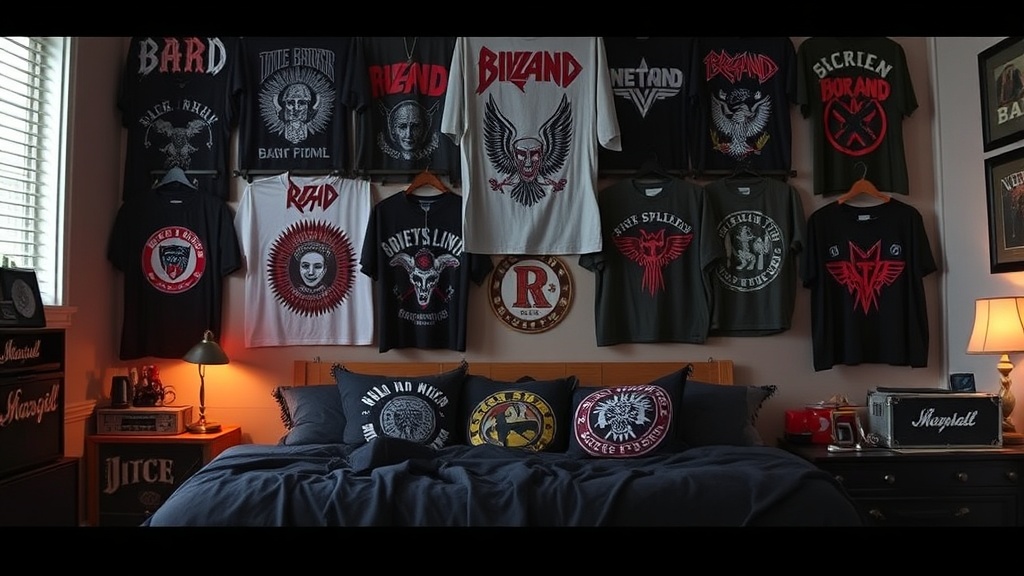
Clothing rails—the kind used in boutiques—can work in residential spaces too. A simple black metal rack against one wall creates a "collection" vibe rather than a "wardrobe" vibe. Add slim wooden hangers (never wire—those leave shoulder bumps that won't steam out) and space shirts evenly. This method lets you appreciate the full silhouette of each shirt, including back prints that floating frames often hide.
How Do You Arrange Multiple Band Shirts for Visual Impact?
A single framed shirt is artwork. A dozen framed shirts arranged poorly looks like a storage problem. The arrangement strategy matters as much as the display method itself.
Chronological grids tell a story. If your collection traces musical history—say, punk bands from 1976 through 1986—arrange them in date order. Visitors can "read" your wall like a timeline. This approach works best when shirts share similar colors or design styles that create visual cohesion despite different band logos.
Color blocking creates striking visual impact. Group black shirts together, then white, then the occasional bold color that breaks the pattern. This technique transforms a random accumulation into what looks like a curated gallery installation. It's particularly effective in modern spaces with neutral walls where the shirts become the primary color source.
Sparse asymmetry prevents the dreaded "merch table" aesthetic. Instead of covering every inch of wall space, choose three to five strategic locations. A shirt above the record player. Another in the hallway. One as a focal point in the bedroom. Negative space makes each piece feel special rather than part of a hoard.
Lighting deserves mention here too. Track lighting or picture lights aimed at displayed shirts prevent the dim, neglected look that makes collections feel like clutter. Warm LED bulbs (2700K–3000K) render fabric colors accurately without the heat damage of halogen alternatives. The Getty Conservation Institute publishes excellent guidelines on light levels for textile preservation if you want to dive into the technical details.
What About Displaying Worn or Damaged Band Shirts?
Not every shirt in your collection is pristine. Some carry battle scars—holes from mosh pits, stains from festival mud, faded armpits from decades of wear. These "damaged" shirts often carry more personal history than mint-condition eBay finds, and they deserve display strategies that honor their condition.
Patchwork collages work beautifully for shirts too threadbare to hang intact. Cut out the printed portions—the chest graphic, the back design, any interesting sleeve details—and mount them in a single large frame as a textile collage. This technique salvages the artwork while acknowledging that the garment itself has reached end-of-life. It's particularly effective for shirts from concerts you actually attended, where the wear marks tell your personal story.
Shadow boxes with context elevate damaged shirts into historical artifacts. Pair the shirt with related items—ticket stubs, setlists, photographs from that tour—creating a mixed-media piece that explains why this particular shirt matters. The damage becomes part of the narrative rather than a flaw to hide. Use UV-protective glass for these pieces since mixed-media displays tend to stay up longer than rotating shirt galleries.
Creative Display Ideas for Small Spaces
Not everyone has a dedicated music room. Apartment dwellers need display solutions that work in tight quarters without overwhelming the space.
Behind clear doors—whether acrylic wardrobe doors or glass cabinet fronts—lets you display shirts while keeping them accessible. Your closet becomes a visual feature rather than hidden storage. This approach works best with color-coordinated arrangements since the shirts will be visible even when you're not actively "displaying" them.
Tabletop display stands designed for jerseys adapt well to band shirts. A single shirt on a miniature easel on a shelf or side table becomes a conversation piece without requiring wall space. Rotate these seasonally or when guests come over.
Under-bed storage with visibility might sound contradictory, but shallow drawers with glass tops let you store shirts flat while still viewing them. These work like giant horizontal frames you can slide out when you want to swap contents. They're ideal for oversized shirts or XXL designs that overwhelm standard frames.
How Much Does It Cost to Properly Display a Band Shirt Collection?
Budget realities matter. Here's a breakdown of what different approaches cost per shirt:
| Method | Cost Per Shirt | Best For |
|---|---|---|
| Floating frame (DIY) | $25–$40 | Permanent display of valuable shirts |
| Floating frame (professional) | $60–$150 | Investment-grade pieces |
| Canvas stretcher method | $15–$25 | Damaged shirts, graphic-focused display |
| Acrylic display case | $30–$50 | Rotating collections, dust protection |
| Decorative ladder | $50–$100 (one-time) | Casual, frequently rotated shirts |
| Clothing rail | $40–$80 (one-time) | Full-garment visibility |
For a collection of twenty shirts, you're looking at $500–$2,000 to display everything properly—less if you mix methods, more if you want every piece in museum-grade framing. Most collectors start with their three to five favorite pieces in quality frames, then expand gradually. The Northeast Document Conservation Center offers free resources on textile preservation that can help you prioritize which shirts merit the investment.
Maintaining Your Display Long-Term
Display isn't a one-time decision. Shirts left in the same position for years develop permanent creases, fading from uneven light exposure, or dust accumulation that embeds into fabric.
Rotate displayed shirts every three to six months. This prevents stress points from becoming permanent and gives you a chance to inspect for any developing issues—silverfish, mildew spots, or color transfer between shirts stored too close together.
Clean the display surfaces monthly. Dust that settles on frames eventually migrates to the fabric inside. A soft microfiber cloth is all you need for glass and acrylic; wooden frames might need occasional polish to prevent oils from transferring to shirt fabric during rotation.
Document what you have. A simple phone photo of each displayed shirt, dated, creates a record that helps you track any gradual fading or damage. If you notice a shirt looking worse after six months of display, you'll know to move it to darker storage or upgrade your UV protection.
Your band shirt collection represents years of musical discovery, concert memories, and personal identity. Leaving it in plastic bins wastes that history. With the right display approach—whether that's a single floating frame above your desk or a full gallery wall—you integrate your musical passion into your daily environment. The shirts become part of your home's personality rather than clutter you need to manage. Start with one display method that fits your space and budget. Add pieces as you find display solutions that work for your specific collection. There's no deadline for getting every shirt on the wall—just the satisfaction of seeing your musical history where you can actually appreciate it.