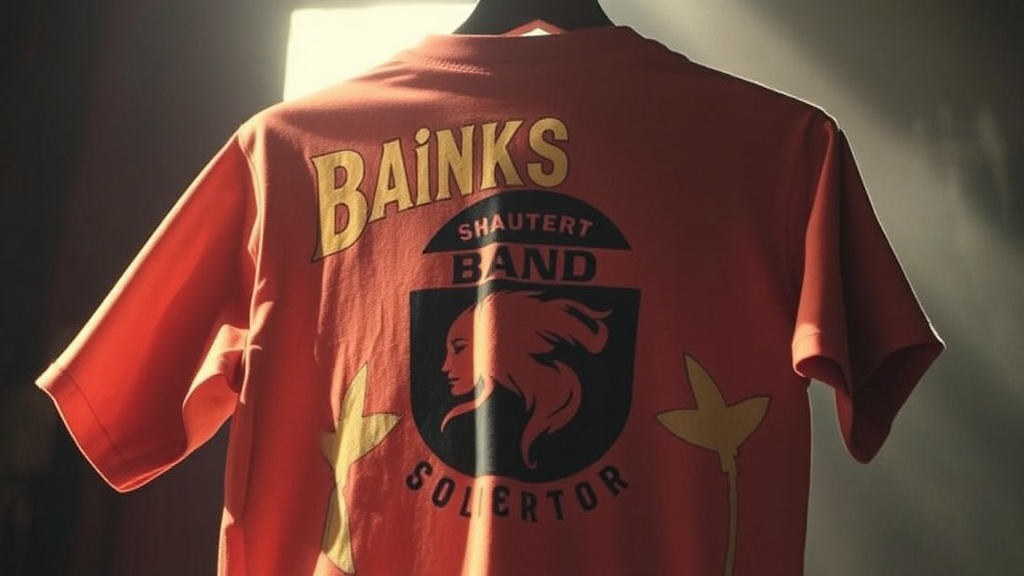
Protecting Your Vintage Band Tee Collection from Sunlight Damage

What You Need to Know About UV Damage and Fabric Degradation
This guide covers how to identify light-induced damage and the specific methods you can use to prevent ultraviolet rays from ruining your vintage graphic tees. Whether you keep your collection in a glass display case or on an open rack, understanding how light interacts with dye and fiber is the only way to ensure your pieces don't fade into oblivion.
Light isn't just an aesthetic issue; it's a chemical one. When UV rays hit a vintage cotton tee, they trigger a process called photodegradation. This breaks down the molecular bonds in both the fabric and the screen-printed ink. You'll notice it first in the color vibrancy—a once-bright neon pink becomes a dull salmon—and eventually, the fibers themselves become brittle. If you've ever touched a shirt that feels strangely "crispy" or stiff, you're likely looking at sun-damaged cotton.
Most collectors underestimate how much light matters when a shirt is just sitting in a room. Even ambient indoor light can cause gradual fading over several years. If your collection sits near a window, you aren't just fighting the direct sun; you're fighting the constant bombardment of UV-A and UV-B rays. It's a slow burn that eats away at the value of your most prized finds.
How Can I Prevent Fading in My Display Cases?
If you use display cases, you have a significant advantage, but only if you choose the right materials. Standard glass is almost useless against UV rays. To actually protect your shirts, you need to look for specialized museum-grade glass or acrylic. Specifically, look for products that offer UV protection up to 99%.
- UV-Filtering Acrylic: This is often lighter and more shatterproof than glass, making it great for heavy collections.
- Museum Glass: This is the gold standard. It's nearly invisible and has high-end UV absorption properties.
- Window Films: If you can't replace your display cases, applying a UV-blocking film to your room's windows is a smart fallback.
Even with these protections, you shouldn't leave your shirts under high-intensity LED or fluorescent lights for extended periods. While LEDs are much better than old-school incandescent bulbs because they emit very little UV, they still produce heat. Heat and light combined are a recipe for disaster. If you notice your display case feels warm to the touch, your shirts are being cooked. You might want to check out the American Chemical Society for more on how chemical changes occur in organic materials under thermal and light stress.
Should I Use Darker Storage for My Rare Tees?
When you aren't displaying a piece, the best place for a vintage band shirt is a dark, cool environment. For high-value items, I recommend using acid-free storage solutions. Avoid standard plastic bins from big-box stores; these can off-gas chemicals that actually damage the print. Instead, use acid-free tissue paper to wrap the shirt before placing it in a breathable cotton bag or a dedicated archival box.
A common mistake is folding a shirt and stacking it in a dark drawer. While this protects it from light, it can lead to permanent creasing and pressure marks on the screen print. If a graphic is pressed against itself for years in a tight fold, the ink can actually bond to the fabric or crack. A better way is to lay them flat in a shallow, acid-free box. This keeps the weight distributed and prevents the ink from cracking due to structural stress.
If you're looking for professional-grade archival materials, the Library of Congress offers extensive resources on the preservation of organic materials and textiles. Their standards for light exposure are what any serious collector should aim to emulate. By keeping your collection in a low-light, temperature-controlled environment, you're effectively pausing the aging process.
Is There a Way to Reverse Fading?
The short answer is no. Once the pigment has been stripped from the cotton fibers by UV radiation, you cannot "re-dye" a vintage shirt without destroying its authenticity and value. This is why prevention is your only real tool. Trying to use color-restoration products often results in a patchy, uneven look that makes the shirt look like a cheap reproduction rather than a well-preserved vintage piece.
However, you can manage the appearance of fading through careful handling. Avoid washing your vintage tees more than absolutely necessary. Every wash cycle is a moment of mechanical and chemical stress. If a shirt is a centerpiece of your collection, consider it a "display-only" item. If you must wash it, use cold water and a neutral pH detergent, and never, ever use a dryer. The heat from a dryer is a primary culprit for the "cracked" look on vintage graphics.
| Damage Type | Primary Cause | Prevention Method |
|---|---|---|
| Color Fading | UV/Sunlight Exposure | UV-filtering glass or dark storage |
| Ink Cracking | Heat and Improper Folding | Flat storage in acid-free boxes |
| Fiber Brittleness | Heat and Chemical Exposure | Cool, humidity-controlled environment |
Ultimately, treating your collection like a museum archive rather than a laundry pile is the key to longevity. A well-maintained vintage tee is a piece of history. Respect the material, and it will stay vibrant for decades.