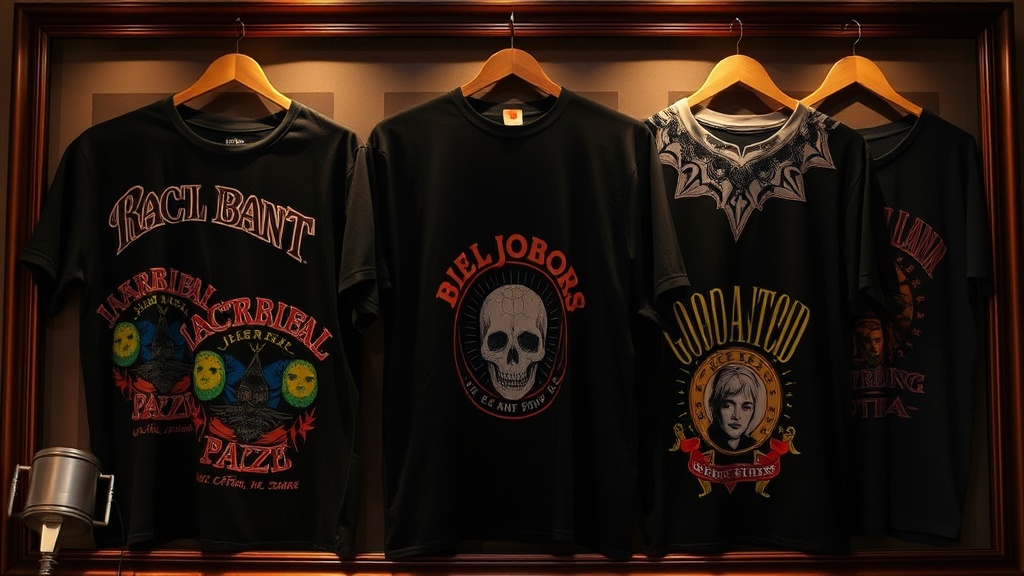
How to Properly Frame and Display Your Vintage Band T-Shirt Collection

What's Covered in This Guide (and Why Your Collection Deserves Better Than a Drawer)
This guide covers everything needed to frame and display vintage band t-shirts—from selecting the right materials to choosing between DIY and professional framing. Vintage band tees aren't just clothing. They're artifacts. A 1977 Sex Pistols shirt, a faded Metallica tour tee from 1986, that rare Nirvana In Utero promo—these pieces represent moments in music history. When they're stuffed in plastic bins or hidden in closets, nobody sees them. More importantly, improper storage slowly destroys them. This post walks through preservation techniques, display options, and the mistakes that ruin valuable pieces. By the end, you'll know exactly how to turn that collection into wall-worthy art without damaging a single thread.
How Do You Frame a Band T-Shirt Without Damaging It?
The short answer: use archival materials and never, ever glue or sew directly into the fabric. Damage happens when people treat shirts like posters—tacking them up, using regular tape, or cramming them into cheap frames from big-box stores.
Here's the thing—vintage band shirts are almost always cotton or cotton blends that degrade over time. The fibers become brittle. Colors fade. A shirt from the 1980s isn't built like modern fast fashion. It's older, more fragile, and often worth hundreds (sometimes thousands) of dollars.
There are three primary mounting methods that preserve condition:
- Sewing to acid-free mat board: A professional framer uses cotton thread to loosely tack the shirt onto archival backing. This distributes weight evenly and prevents sagging.
- Pinning: Stainless steel pins (never rust-prone metals) attach the shirt at strategic points—shoulders, collar, sides. Less invasive than sewing.
- Pressure mounting: The shirt sits between layers of UV-protective acrylic and backing board, held in place by the frame's tension. No fasteners touch the fabric directly.
The catch? Pressure mounting works best for thinner, softer shirts. Heavy, stiff vintage tees—especially those with thick screen prints—need sewing or pinning to lay flat. A bubbled, wrinkled display looks amateur and can actually stress the fabric over time.
Materials That Matter
Not all framing supplies are equal. Regular mat board contains lignin—plant material that breaks down and releases acids. Over years, this yellows fabric and weakens fibers. Always use 100% cotton rag mat board or alpha-cellulose board rated acid-free and lignin-free.
Glass seems like the obvious glazing choice, but it's heavy and shatters. Tru Vue Conservation Clear acrylic offers UV protection at half the weight. Museums use it. For high-value shirts, UV-filtering glass like Tru Vue Museum Glass provides even better protection—though you'll pay more and deal with extra weight.
DIY Framing vs. Professional Services: What's Worth the Money?
DIY framing costs $40–$80 per shirt if you source materials carefully. Professional framing runs $150–$400+ per piece depending on size, materials, and your location. For a collection of 50 shirts, that's the difference between $2,000 and $15,000.
That said, professional framers bring expertise most collectors lack. They understand fabric tension, know how to handle fragile vintage material, and guarantee their work. A botched DIY job—wrinkles, crooked mounting, damaged fabric—often costs more to fix than professional framing would have.
| Factor | DIY Framing | Professional Framing |
|---|---|---|
| Cost per shirt | $40–$80 | $150–$400+ |
| Material quality control | You choose (requires research) | Professionally sourced |
| Time investment | 2–4 hours per shirt | Drop off and pick up |
| Risk of damage | Moderate (skill-dependent) | Low (insured, experienced) |
| Customization | Limited by your skills/tools | Mat colors, spacers, shadow boxes |
| Best for | Common shirts, tight budgets | High-value, sentimental pieces |
Worth noting: many collectors take a hybrid approach. They frame common shirts themselves and send rare, valuable pieces to professionals. A $30 thrift store Iron Maiden tee? DIY makes sense. A $2,500 original 1979 Led Zeppelin In Through the Out Out tour shirt? Pay the professional.
Where Should You Display Framed Band T-Shirts?
Never in direct sunlight. Never in bathrooms, kitchens, or unconditioned spaces. UV rays fade ink. Humidity breeds mold. Temperature swings expand and contract fabric, stressing fibers and causing warping.
Ideal conditions mirror museum standards: 65–70°F with 45–55% relative humidity. Basements and attics are death sentences for textiles. Hallways, living rooms, and home offices work better—provided you control light exposure.
Here are display options that protect while showcasing the collection:
- Gallery wall arrangement: Group 4–9 framed shirts in a grid. Use identical frames for cohesion or mix sizes for an eclectic look. Leave 2–3 inches between frames.
- Staircase display: Follow the angle of the stairs, hanging shirts at eye level as you ascend.
- Rotating showcase: Frame 3–5 shirts and swap them quarterly. Keeps the display fresh and limits light exposure per shirt.
- Shadow box shelving: Deep frames allow shirts to hang naturally rather than pressing flat. Better for thick, unwashed vintage pieces with natural drape.
Lighting matters enormously. Philips Hue smart bulbs let you adjust warmth and brightness. Aim for under 150 lux—roughly the light level in a dim restaurant. LED track lighting with UV filters works well for highlighting specific pieces.
The UV Protection Myth
Many collectors assume UV-protective glass or acrylic makes shirts bulletproof. It doesn't. UV filtering blocks up to 99% of ultraviolet light, but visible light also causes fading—just slower. A shirt in bright room light will fade eventually even behind Museum Glass. Limit total light exposure. Use dimmers. Rotate displays. Treat these pieces like the fragile artifacts they are.
How Do You Store Shirts You're Not Displaying?
Archival storage boxes—not plastic bins, not cardboard, not cedar chests. Plastic traps moisture. Cardboard contains acids. Cedar oils damage fabric over time.
Acid-free tissue paper goes between folded shirts. Never store them pressed flat for years—creases become permanent. Refold every 6–12 months along different lines. Store boxes flat in climate-controlled closets, never stacked more than three high (weight compresses bottom layers).
For especially valuable shirts—think original 1970s punk tees, first-print Metallica Master of Puppets shirts, or anything signed—consider Gaylord Archival textile storage boxes. They're expensive ($30–$60 per box) but used by the Smithsonian and major museums worldwide.
Insurance and Documentation
Homeowners insurance rarely covers collectibles at full value without a rider. Document every shirt with photos, purchase receipts, and condition notes. Grading services like CGC Trading Cards (which now grades vintage band shirts) provide authentication and encapsulation—sealing shirts in tamper-evident cases with assigned grades. Encapsulated shirts can still be framed, though the case adds bulk and weight.
What About Ironing and Cleaning Before Framing?
Don't. Just don't. Washing vintage band shirts risks shrinkage, print cracking, and color bleeding. Ironing—especially with steam—can set stains permanently and damage old screen prints. If a shirt smells musty, air it out for several days in a shaded, ventilated area.
For shirts already stained or yellowed, professional textile conservation is the only safe option. Companies like Spicer Art Conservation specialize in treating vintage fabrics. It's not cheap—expect $100–$300 per piece for cleaning and stabilization—but for a shirt worth $1,000+, conservation protects the investment.
The only prep work you should do? Inspect for loose threads, weakened seams, and holes. Document everything with photos. If the shirt has historical damage—say, a tear from an actual 1988 concert mosh pit—consider leaving it. That damage tells a story. Framing preserves that history, imperfections and all.
Common Framing Mistakes That Destroy Value
Collectors make the same errors repeatedly. Avoid these:
- Using regular glass cleaner: Ammonia-based cleaners off-gas and damage fabric. Use distilled water only if you must clean glazing.
- Tight folding: Forces creases that crack old screen prints. Fold loosely with acid-free tissue padding.
- Hanging on exterior walls: Exterior walls experience more temperature fluctuation. Interior walls maintain stable conditions.
- Ignoring the back: Dusty, unsealed frame backs let in pollutants. Seal frames with acid-free backing paper.
- Over-cleaning the shirt: That "vintage fade" collectors prize? Aggressive cleaning destroys it.
Here's the thing about framing band shirts—it's part preservation, part exhibition design, part personal expression. The goal isn't perfection. It's honoring the music, the memories, and the culture these shirts represent. A well-framed Black Flag tee from 1983 isn't just decoration. It's a conversation starter. A time capsule. Proof that you—or someone—was there when the music mattered.
Start with one shirt. The one that means most. Frame it properly, hang it where light won't assault it, and build from there. Collections grow. Walls fill. And those shirts finally get the display they deserve—out of drawers, out of bins, where the stories can actually be seen.